Most of us know what a teleseminar is: a seminar or class convened over a video or audio communications link, usually telephone. Teleseminars are more effective for some topics than for others, but when they do work, the cost savings compared to face-to-face seminars are significant.
Most topics are possible in the teleseminar format. Some topics do work better than others, but because the costs are so low, the cost-effectiveness tradeoff is almost always favorable. Most of the cost is the time your employees spend preparing for and attending training, and then later incorporating what they learn into their everyday actions. A further cost source is the delay of ongoing activity while attendees are in training. When attendees have to travel off-site, there are additional travel expenses.
Teleseminars limit most of these costs. Attendees don't have to travel, and neither do I. Your costs in attendee time are contained, and you don't have to pay my travel expenses either. The characteristics of situations that are best suited for the teleseminar format are:
- Dispersed organization in which many attendees would have to travel to attend a face-to-face training
- Topics that don't require face-to-face demonstrations
- Attendee population under pressure to complete existing commitments
- Highly paid attendees or attendees whose time is essential to forward progress in critical existing assignments
Design options
Accompanying the teleseminar are several options that can help you achieve organizational goals. I can provide:
- A resource guides for further reading
- For examples of some available resources, check out my links collection.
- A self-assessment
- This is a little survey people can take that, at the end, rates them according to the need for further study or practice, and provides targeted resources.
- Anonymous surveys
- We can survey the attendees anonymously to surface issues and concerns.
- Targeted pre-work
- We could pose a case study for people to consider, and ask them for solutions to common problems attendees face. Then, in live discussion, we can compare strengths and weaknesses of the various proposals.
Managing risks
There are a few risks. First, some attendees continue with "real work" while the teleseminar is underway. When they do, they can't really learn, and this undermines the purpose of the teleseminar. Second, because they aren't really concentrating on their work, they experience higher error rates than are typical. Some of these errors can be costly. Third, some attendees let their attentions wander to games, Web surfing, and other personal matters. They don't learn either, but at least they aren't making errors.
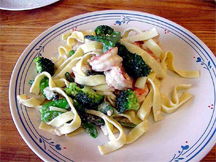 Some organizations have
regular "Lunch 'n Learns" or "Brown Bags." This format might work for in-person seminars and
training, but for teleseminars, it's problematic. When we combine the teleseminar with food,
then in addition to all the other distractions, the teleseminar presenter must compete with
the food, not only during its consumption, but with the chemical effects afterwards. This can
be troublesome, especially if the menu includes items with significant sugar content: soft
drinks, cookies, brownies, and other sweets.
Some organizations have
regular "Lunch 'n Learns" or "Brown Bags." This format might work for in-person seminars and
training, but for teleseminars, it's problematic. When we combine the teleseminar with food,
then in addition to all the other distractions, the teleseminar presenter must compete with
the food, not only during its consumption, but with the chemical effects afterwards. This can
be troublesome, especially if the menu includes items with significant sugar content: soft
drinks, cookies, brownies, and other sweets.
To manage all these risks, I restrict the duration of teleseminar sessions to 60 minutes. That's quite enough time to be on the phone at one sitting. Second, I recommend that attendees gather in conference rooms. This takes them away from their desks, and inhibits many from surfing the Web or processing email. And I ask that, when my teleseminars are conducted close to lunch time, attendees have time to eat first, plus a fifteen-minute break. So, for instance, you could serve lunch from Noon to 12:30, allow a fifteen minute break, and begin the seminar at 12:45. I might even join you for lunch.
Follow Rick


Send an email message to a friend
rbrenIyeJIiAfnGdKlUXrner@ChacsxirZwZlENmHUNHioCanyon.comSend a message to Rick
A Tip A Day feed
Point Lookout weekly feed
 My blog, Technical Debt for Policymakers, offers
resources, insights, and conversations of interest to policymakers who are concerned with managing
technical debt within their organizations. Get the millstone of technical debt off the neck of your
organization!
My blog, Technical Debt for Policymakers, offers
resources, insights, and conversations of interest to policymakers who are concerned with managing
technical debt within their organizations. Get the millstone of technical debt off the neck of your
organization!Point Lookout by
starting your Amazon search here

- "Rick is a dynamic presenter who thinks on his feet to keep the material relevant to the
group."
— Tina L. Lawson, Technical Project Manager, BankOne (now J.P. Morgan Chase) - "Rick truly has his finger on the pulse of teams and their communication."
— Mark Middleton, Team Lead, SERS
 Save a bundle and even more important save time! Order the Combo Package and download all ebooks
and tips books at once.Bad boss, long commute, troubling ethical questions, hateful colleague? Learn what we can do when we
love the work but not the job.Are your project teams plagued by turnover, burnout, and high defect rates? Turn your culture around.
Save a bundle and even more important save time! Order the Combo Package and download all ebooks
and tips books at once.Bad boss, long commute, troubling ethical questions, hateful colleague? Learn what we can do when we
love the work but not the job.Are your project teams plagued by turnover, burnout, and high defect rates? Turn your culture around.