Visiting a client, I get a tour of the facility. I notice that one office has a scenic view of snow-capped mountains. I almost pass by, and then stop in mid-stride — there are very few snow-capped mountains in Chicago. Snow-capped land fills, maybe, but no snow-capped mountains, and certainly not in September.
I take a half step back and peek in.
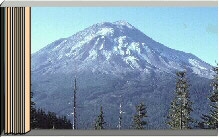 The occupant is out, so I look more closely at the mountains and realize that I'm looking at a print — complete with window ledge and vertical blinds. The office has no actual windows, but on another wall is a poster — you've probably seen it — of a skier essing back and forth down an unending slope of deep powder.
On the desk is an old prism-shaped wooden name stick. It reads "Warren's Desk." I never did meet Warren, but I'd guess that he's a skier — or was once, before he moved to Chicago.
Add meaning and comfort
to your working environment.
Make it your own.Warren had a small windowless office, but he had made it his own. You can do the same with yours, if you add meaning and comfort to your environment. Here are just a few possibilities.
- If your office is cold, bring in an "adult blankie." If you're more comfortable in slippers, bring a pair to work.
- Pay attention to ergonomics. Make your chair comfortable — adjust its height for safety and comfort. Add a pillow or seat cushion. Get a wrist rest.
- If you're on the phone much, ask for a headset. Your neck will thank you. If the company won't buy you a headset, get a doctor's note, and see what they do then.
- Hang prints, photos, or textiles. Bring in a decorative ceramic pot, or a sculpture one of your kids made.
- If you don't like clutter, clean up your office. If you like clutter, clutter it. In your office, you're in charge of defining organized.
- Get a plant or two. If you're a serial plant killer, get help — or get fake plants.
- Think about toys, stuffed animals, and goofy clocks.
- If you live in earthquake country, prepare. Arrange things so they will land where you usually aren't.
- Check out what other people are doing around you. It's amazing what you can see when you look. Search the Web for "office accessories" to get more ideas. Here are Google's results.
Whether you work in a cube like Dilbert's or in a custom-decorated office with a vast expanse of carpeted emptiness, you can take control of your surroundings and make them uniquely yours. When you Own Your Space, you'll feel better about the time you spend at work — and you'll lower your level of stress.  Top
Top  Next Issue
Love the work but not the job? Bad boss, long commute, troubling ethical questions, hateful colleague? This ebook looks at what we can do to get more out of life at work. It helps you get moving again! Read Go For It! Sometimes It's Easier If You Run, filled with tips and techniques for putting zing into your work life. Order Now!
Photo: Harry Glicken, Mount St. Helens, May 17, 1980. Courtesy US Geological Survey.
Your comments are welcome
Would you like to see your comments posted here? rbrendPtoGuFOkTSMQOzxner@ChacEgGqaylUnkmwIkkwoCanyon.comSend me your comments by email, or by Web form.About Point Lookout
 Thank you for reading this article. I hope you enjoyed it and
found it useful, and that you'll consider recommending it to a friend.
Thank you for reading this article. I hope you enjoyed it and
found it useful, and that you'll consider recommending it to a friend.
This article in its entirety was written by a human being. No machine intelligence was involved in any way.
Point Lookout is a free weekly email newsletter. Browse the archive of past issues. Subscribe for free.
Support Point Lookout by joining the Friends of Point Lookout, as an individual or as an organization.
Do you face a complex interpersonal situation? Send it in, anonymously if you like, and I'll give you my two cents.
Related articles
More articles on Personal, Team, and Organizational Effectiveness:
 When Meetings Boil Over
- At any time, without warning, you can find yourself in a meeting that boils over. Sometimes tempers
rise, then voices rise, and then people yell and scream. What can a team do when meetings threaten to
boil over — and when they do?
 Asking Brilliant Questions
- Your team is fortunate if you have even one teammate who regularly asks the questions that immediately
halt discussions and save months of wasted effort. But even if you don't have someone like that, everyone
can learn how to generate brilliant questions more often. Here's how.
 Action Item Avoidance
- In some teams, members feel so overloaded that they try to avoid any additional tasks. Here are some
of the most popular patterns of action item avoidance.
 Guidelines for Delegation
- Mastering the art of delegation can increase your productivity, and help to develop the skills of the
people you lead or manage. And it makes them better delegators, too. Here are some guidelines for delegation.
 The Deck Chairs of the Titanic: Task Duration
- Much of what we call work is as futile and irrelevant as rearranging the deck chairs of the
Titanic. We continue our exploration of futile and irrelevant work, this time emphasizing behaviors
that extend task duration.
See also Personal, Team, and Organizational Effectiveness for more related articles.
Forthcoming issues of Point Lookout
 Coming May 1: Antipatterns for Time-Constrained Communication: 2
- Recognizing just a few patterns that can lead to miscommunication can reduce the incidence of miscommunications. Here's Part 2 of a collection of antipatterns that arise in communication under time pressure, emphasizing those that depend on content. Available here and by RSS on May 1.
- And on May 8: Antipatterns for Time-Constrained Communication: 3
- Recognizing just a few patterns that can lead to miscommunication can reduce the incidence of problems. Here is Part 3 of a collection of antipatterns that arise in technical communication under time pressure, emphasizing past experiences of participants. Available here and by RSS on May 8.
Coaching services
I offer email and telephone coaching at both corporate and individual rates. Contact Rick for details at rbrendPtoGuFOkTSMQOzxner@ChacEgGqaylUnkmwIkkwoCanyon.com or (650) 787-6475, or toll-free in the continental US at (866) 378-5470.
Get the ebook!
Past issues of Point Lookout are available in six ebooks:
- Get 2001-2 in Geese Don't Land on Twigs (PDF, )
- Get 2003-4 in Why Dogs Wag (PDF, )
- Get 2005-6 in Loopy Things We Do (PDF, )
- Get 2007-8 in Things We Believe That Maybe Aren't So True (PDF, )
- Get 2009-10 in The Questions Not Asked (PDF, )
- Get all of the first twelve years (2001-2012) in The Collected Issues of Point Lookout (PDF, )
Are you a writer, editor or publisher on deadline? Are you looking for an article that will get people talking and get compliments flying your way? You can have 500-1000 words in your inbox in one hour. License any article from this Web site. More info
Follow Rick


Recommend this issue to a friend
Send an email message to a friend
rbrendPtoGuFOkTSMQOzxner@ChacEgGqaylUnkmwIkkwoCanyon.comSend a message to Rick
A Tip A Day feed
Point Lookout weekly feed
 My blog, Technical Debt for Policymakers, offers
resources, insights, and conversations of interest to policymakers who are concerned with managing
technical debt within their organizations. Get the millstone of technical debt off the neck of your
organization!
My blog, Technical Debt for Policymakers, offers
resources, insights, and conversations of interest to policymakers who are concerned with managing
technical debt within their organizations. Get the millstone of technical debt off the neck of your
organization! Are your project teams plagued by turnover, burnout, and high defect rates? Turn your culture around.Bad boss, long commute, troubling ethical questions, hateful colleague? Learn what we can do when we
love the work but not the job.
Are your project teams plagued by turnover, burnout, and high defect rates? Turn your culture around.Bad boss, long commute, troubling ethical questions, hateful colleague? Learn what we can do when we
love the work but not the job.- Your stuff is brilliant! Thank you!
- You and Scott Adams both secretly work here, right?
- I really enjoy my weekly newsletters. I appreciate the quick read.
- A sort of Dr. Phil for Management!
- …extremely accurate, inspiring and applicable to day-to-day … invaluable.
- More
Fed up with tense, explosive meetings? Are you the target of a bully? Learn how to make peace with conflict.Save a bundle and even more important save time! Order the Combo Package and download all ebooks
and tips books at once.