As the exchange between Michel and Wilson grew more heated, Nicole began to feel more and more threatened. Sitting as she was, right between them, she was directly in the line of fire. Finally, she could keep silent no more. In a tone she regretted even as she spoke, she said, "Will you two please settle down? If you can't, take it outside!"
In meetings, choose
your seat with
strategic goals
in mindMichel and Wilson halted immediately, and although everyone in the meeting — including Nicole — was relieved, Nicole's regret deepened. 'Why couldn't I have kept still?' she thought. 'I wasn't involved and it wasn't my problem.'
Nicole might not have been involved at the content level of the discussion, but the placement of her chair meant that she was involved in the conflict. Her discomfort led her to demand an end to the exchange, and although nothing bad happened this time, such interventions can be risky.
In meetings, where you sit does influence your participation. Since your seat can even affect your status within the meeting, choose your seat with these 12 strategic goals in mind.
- As chair, choose carefully
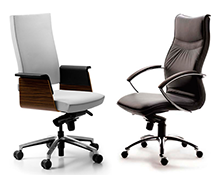 If the room is set in classroom or auditorium style, as chair you have little choice — the front is for you. But if the room has a long table, typically, the chair sits in the "power position" — at one end — even though the power position isn't always so powerful. The effective radius of control of any position is only about 10-15 feet (3-5 meters). If the table is longer than that, or if attendees will be discussing issues, the chair should sit in the middle of one side of the long table, for better control.
- If you plan to participate, sit in a central location
- Sitting near the center of action of the meeting gives you an advantage if you want to contribute or influence the flow of the meeting. If you aren't a key contributor, and if you want to stay out of the action, choose a corner.
- Sit next to your trouble
- If you expect hostile or tense exchanges with someone, choose a nearby seat, preferably to the person's right. Sitting in easy line of sight can invite confrontation, especially if both of you are male. Sitting side-by-side is less threatening and can even be friendly.
- Stay out of the line of fire
- If you anticipate that two other attendees might engage in a heated exchange, put some space between you and them. Avoid sitting in the line of fire, and avoid sitting near either one, unless you want to express your feelings of allegiance to one party.
Meeting dynamics are complicated — we all affect each other in ways we might not realize. In meetings, where you stand depends in part on where you sit.  Top
Top  Next Issue
Do you spend your days scurrying from meeting to meeting? Do you ever wonder if all these meetings are really necessary? (They aren't) Or whether there isn't some better way to get this work done? (There is) Read 101 Tips for Effective Meetings to learn how to make meetings much more productive and less stressful — and a lot more rare. Order Now!
This is Part I of a two-part article. See "Take Any Seat: II," Point Lookout for June 2, 2004, for more.
Your comments are welcome
Would you like to see your comments posted here? rbrenaXXxGCwVgbgLZDuRner@ChacDjdMAATPdDNJnrSwoCanyon.comSend me your comments by email, or by Web form.About Point Lookout
 Thank you for reading this article. I hope you enjoyed it and
found it useful, and that you'll consider recommending it to a friend.
Thank you for reading this article. I hope you enjoyed it and
found it useful, and that you'll consider recommending it to a friend.
This article in its entirety was written by a human being. No machine intelligence was involved in any way.
Point Lookout is a free weekly email newsletter. Browse the archive of past issues. Subscribe for free.
Support Point Lookout by joining the Friends of Point Lookout, as an individual or as an organization.
Do you face a complex interpersonal situation? Send it in, anonymously if you like, and I'll give you my two cents.
Related articles
More articles on Personal, Team, and Organizational Effectiveness:
 Don't Worry, Anticipate!
- Dramatic changes in policy or procedure are often challenging, especially when they have some boneheaded
components. But by accepting them, by anticipating what you can, and by applying Pareto's principle,
you can usually find a safe path that suits you.
 Dealing with Negative Progress
- Many project emergencies are actually the result of setbacks — negative progress. Sometimes these
mishaps are unavoidable, but often they're the result of patterns of organizational culture. How can
we reduce the incidence of setbacks?
 Ending Sidebars
- We say that a sidebar is underway in a meeting when two or more meeting participants converse without
having been recognized by the chair. Sidebars can be helpful, but they can also be disruptive. How can
we end sidebars quickly and politely?
 How We Waste Time: I
- Time is the one workplace resource that's evenly distributed. Everyone gets exactly the same share,
but some use it more wisely than others. Here's Part I of a little catalog of ways we waste time.
 Layoff Warning Signs: II
- Layoffs often signal their arrival well in advance, if you know what to watch for. Some of the indicators
are subtle and easily confused with normal operations. Here are three more indicators that layoffs might
be secretly underway.
See also Personal, Team, and Organizational Effectiveness for more related articles.
Forthcoming issues of Point Lookout
 Coming October 1: On the Risks of Obscuring Ignorance
- When people hide their ignorance of concepts fundamental to understanding the issues at hand, they expose their teams and organizations to a risk of making wrong decisions. The organizational costs of the consequences of those decisions can be unlimited. Available here and by RSS on October 1.
 And on October 8: Responding to Workplace Bullying
- Effective responses to bullying sometimes include "pushback tactics" that can deter perpetrators from further bullying. Because perpetrators use some of these same tactics, some people have difficulty employing them. But the need is real. Pushing back works. Available here and by RSS on October 8.
Coaching services
I offer email and telephone coaching at both corporate and individual rates. Contact Rick for details at rbrenaXXxGCwVgbgLZDuRner@ChacDjdMAATPdDNJnrSwoCanyon.com or (650) 787-6475, or toll-free in the continental US at (866) 378-5470.
Get the ebook!
Past issues of Point Lookout are available in six ebooks:
- Get 2001-2 in Geese Don't Land on Twigs (PDF, )
- Get 2003-4 in Why Dogs Wag (PDF, )
- Get 2005-6 in Loopy Things We Do (PDF, )
- Get 2007-8 in Things We Believe That Maybe Aren't So True (PDF, )
- Get 2009-10 in The Questions Not Asked (PDF, )
- Get all of the first twelve years (2001-2012) in The Collected Issues of Point Lookout (PDF, )
Are you a writer, editor or publisher on deadline? Are you looking for an article that will get people talking and get compliments flying your way? You can have 500-1000 words in your inbox in one hour. License any article from this Web site. More info
Follow Rick


Recommend this issue to a friend
Send an email message to a friend
rbrenaXXxGCwVgbgLZDuRner@ChacDjdMAATPdDNJnrSwoCanyon.comSend a message to Rick
A Tip A Day feed
Point Lookout weekly feed
 My blog, Technical Debt for Policymakers, offers
resources, insights, and conversations of interest to policymakers who are concerned with managing
technical debt within their organizations. Get the millstone of technical debt off the neck of your
organization!
My blog, Technical Debt for Policymakers, offers
resources, insights, and conversations of interest to policymakers who are concerned with managing
technical debt within their organizations. Get the millstone of technical debt off the neck of your
organization! Learn how to make meetings more productive — and more rare.
- Your stuff is brilliant! Thank you!
- You and Scott Adams both secretly work here, right?
- I really enjoy my weekly newsletters. I appreciate the quick read.
- A sort of Dr. Phil for Management!
- …extremely accurate, inspiring and applicable to day-to-day … invaluable.
- More
Are your project teams plagued by turnover, burnout, and high defect rates? Turn your culture around.